Borer beetle sighted in Bellville: Residents encouraged to complete urgent surveys
13 March 2025
The City of Cape Town wants to inform residents that samples taken from a Boxelder tree on a private property in Oakdale, Bellville tested positive for the invasive Polyphagous Shot Hole Borer beetle (PSHB). This latest infestation is the first to be recorded in this area, and is of great concern. Residents in the area as well as City Nature Reserve visitors can expect to be approached with urgent surveys, which will assist the City with the crucial planning on how to further deal with the borer beetle and its impact.
The City was notified of a possible infested tree in Oakdale, Bellville and deployed a staff member from the Invasive Species Unit to assess the area and to collect samples for DNA verification. Following the DNA verification, unfortunately it has been confirmed that the Boxelder tree is indeed infested with PSHB.
‘At this point, we cannot confirm the number of infested trees in the Oakdale area as our team will have to conduct surveys in order to determine the extent of the spread. I am urging all private land owners in Bellville to urgently inspect the trees on their properties for symptoms and to contact us immediately should any of these be visible on any trees. The City also needs access to private properties to conduct a full assessment to determine the extent of the infestation in and around Oakdale. I therefore ask residents to please give the teams access to their properties so that we can determine the extent of the PSHB infestation. We are extremely concerned about the latest sighting and request the assistance and cooperation of residents and businesses that work with plant material,’ said the City’s Deputy Mayor and Mayoral Committee Member for Spatial Planning and Environment, Alderman Eddie Andrews.
In addition to the local door-to-door survey, the City is also currently running a City-wide survey to reach residents who plan on visiting any of its nature reserves over the next few weeks.
‘The continued loss of trees due to PSHB infestation is something that the City and our residents cannot afford and we will have to work together to curb the spread of this invasive beetle. To this end, the City’s Invasive Species Unit is currently conducting a survey to ascertain the level of awareness amongst residents of the PSHB and its risks, particularly those associated to the use and movement of firewood. Information that will be gathered through this survey will inform some of our important management decisions and will assist in directing the City’s position on the use of firewood, particularly in the protected areas and other City’s facilities. We need the public to realise the seriousness of the situation and the huge threat PSHB poses to our trees in Cape Town. I believe that our nature reserve visitors will be able to provide us with some key insights here. Our Reserve staff will provide residents with the survey questions or they can simply scan the QR code during their visit.
‘To prevent or minimise the spread of PSHB, it is important that we avoid moving plant material such as firewood from one area to the other and most importantly to our Protected Areas and public open spaces. Firewood should especially not be bought and moved from areas where trees are infested,’ said the City’s Deputy Mayor and Mayoral Committee Member for Spatial Planning and Environment, Alderman Eddie Andrews.
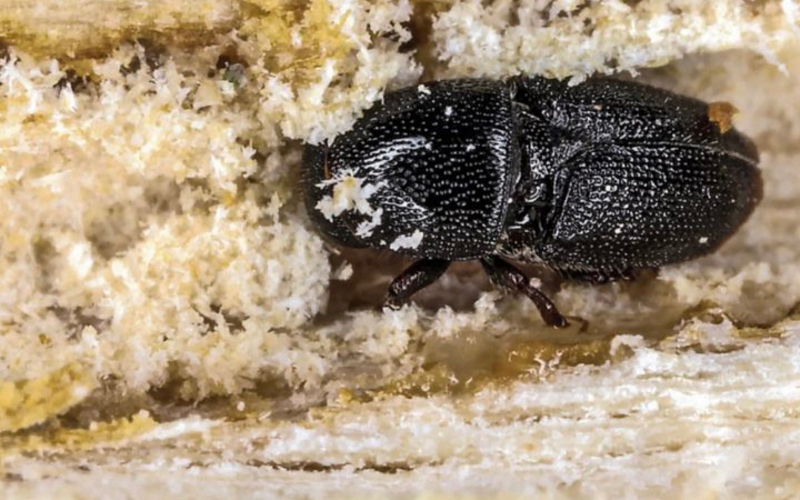
To date, over 6 000 infested trees have been identified in the Cape. Among these trees, there are highly susceptible reproductive host species such as Boxelder; Weeping Willow and English Oak.
What to look out for and symptoms of infested trees:
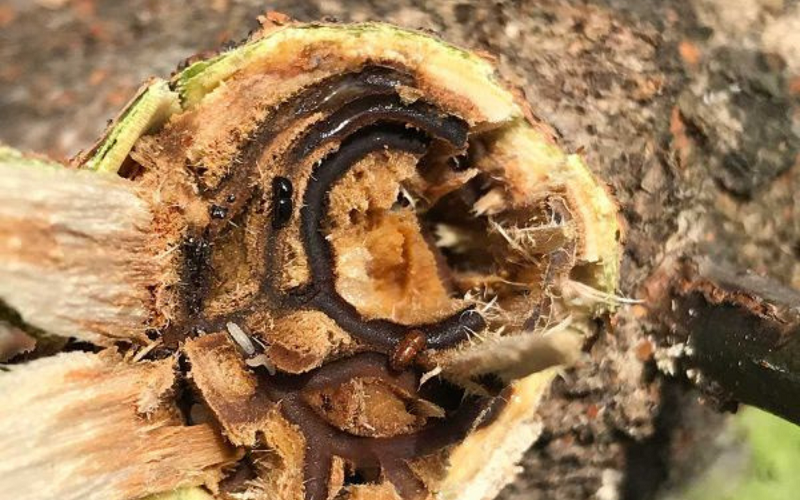
Branch dieback – cracks on the branch; discoloured leaves; dry and leafless branches; branch break-off revealing webs of galleries filled with black fungus
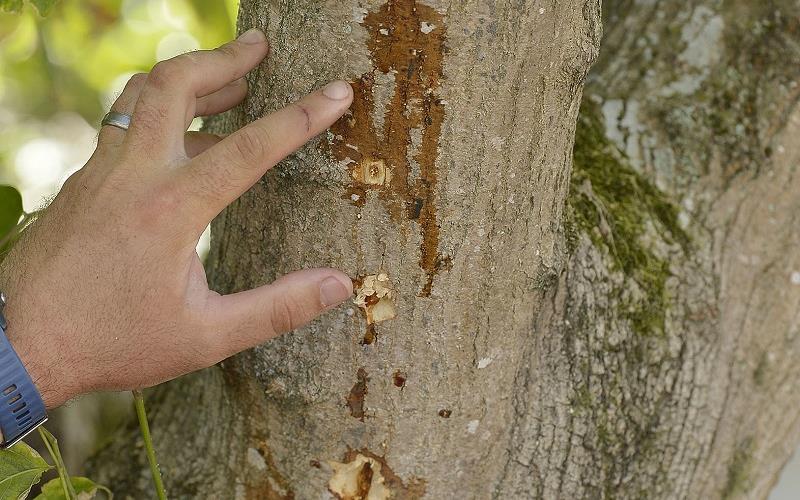
Gumming – blobs of goo coming out of the bark; oozing of liquid and gum from the beetle holes
Entry and exit holes – very small holes on the bark of the tree, the size of a sesame seed (2mm); shotgun-like scars developing around the holes
Staining – brown or dark stains on the bark of the tree
How to report PSHB beetle sightings:
· Online, at www.capetown.gov.za/InvasiveSpecies
· Call the City of Cape Town’s Invasive Species Unit on 021 444 2357, Monday to Friday, from 07:30 to 16:00
· Send an email to: invasive.species@capetown.gov.za
End
Published by:
City of Cape Town, Media Office